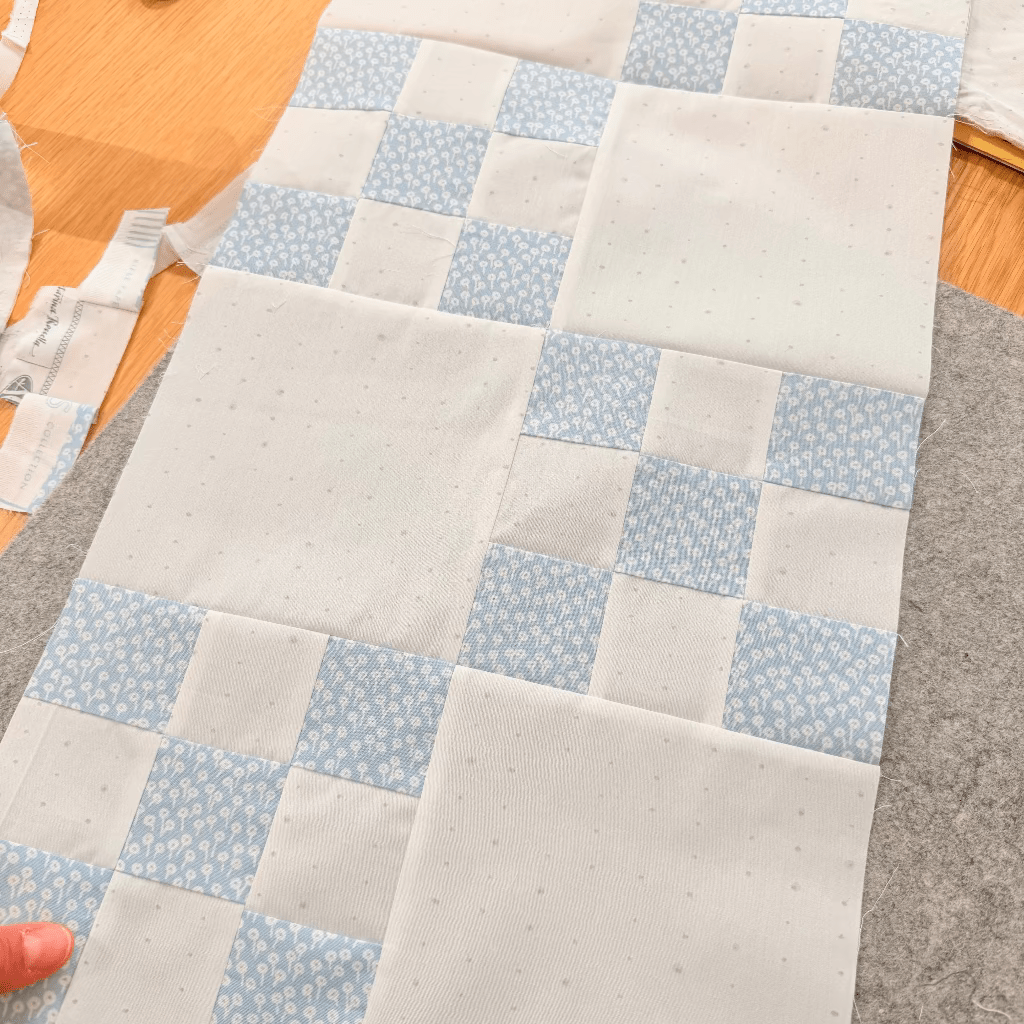
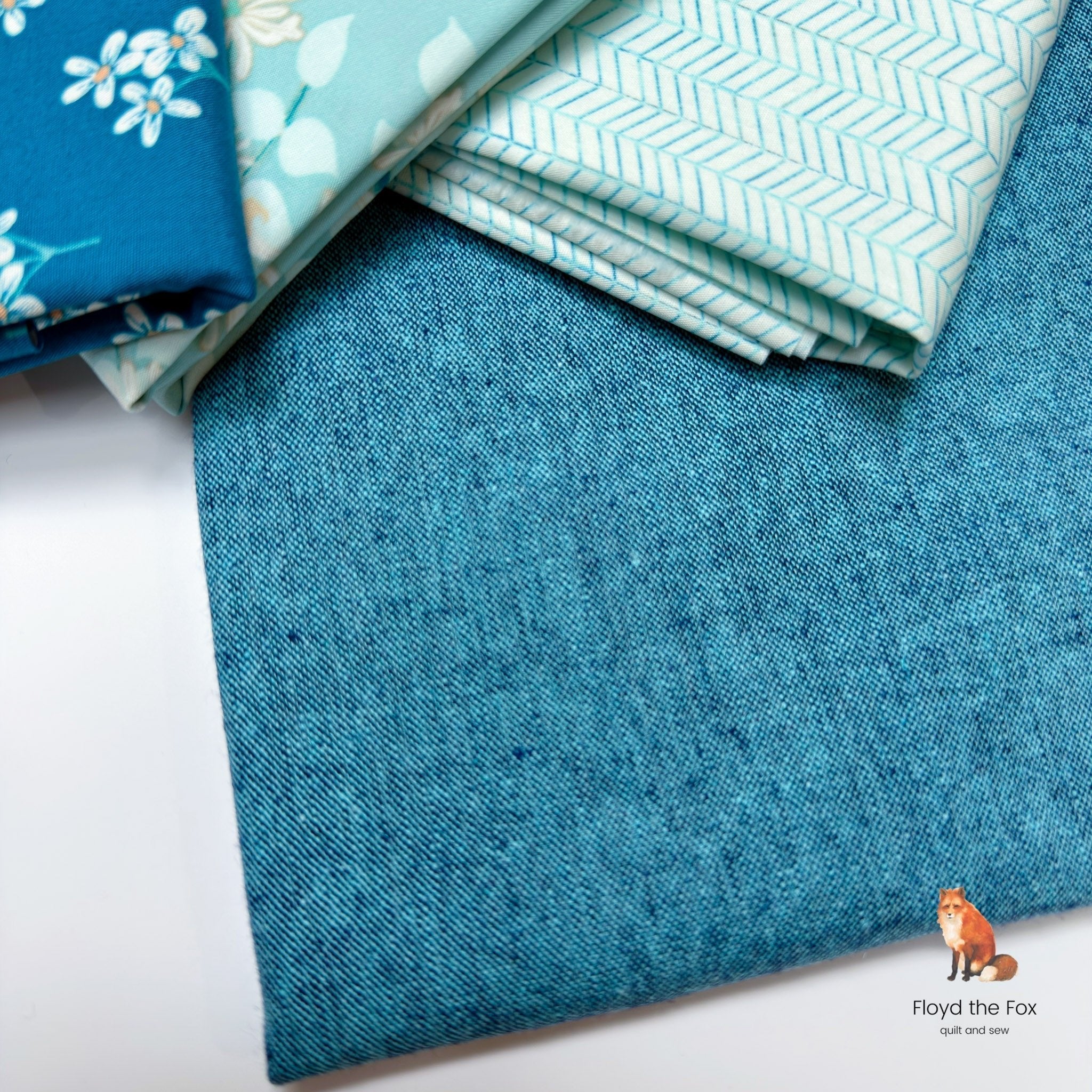
There's that quiet question that many quilters grapple with for longer than they'd like: Am I more modern or more classic?
And often, it's about much more than just a style preference.
Because behind this question usually lie other thoughts:
"Does my taste even truly fit in anywhere?"
"Why do I always buy fabrics that don't go together?"
"Why do I admire modern quilts on Instagram, but end up sewing something more classic?"
"Can I like both without it feeling restless or unfinished?"
The good news is: You don't have to choose.
And even more importantly: You shouldn't force yourself to make this artificial choice.
Many quilters find themselves in a creative dead end at exactly this point. They believe they first need to find their "one style" before they can make good decisions. This sounds reasonable, but in practice, it often leads to the exact opposite: uncertainty, fabric purchases without a clear direction, unfinished projects, and the feeling of not being able to grasp their own taste.
The truth is much more relaxed and, at the same time, much more helpful: A cohesive quilt isn't created by committing to modern or classic. It's created by learning to consciously combine or strategically prioritize both.
That's exactly what this article is about.
Why this style question blocks so many quilters
At first glance, it seems to be only about aesthetics. In reality, it's often about something deeper: orientation, security, and recognition.
A clear style promises order. If you could say "I sew modern" or "I only make classic quilts," many things would be simpler. You might shop more purposefully, plan faster, and feel more confident when cutting.
But quilting is rarely that clear-cut.
Perhaps you love classic blocks like Flying Geese, Log Cabin, or Nine Patch, but at the same time feel drawn to modern color fields, lots of negative space, or bold contrasts. Perhaps you collect romantic floral fabrics, but admire minimalist quilts with clear geometry. Perhaps you want to sew something that is timeless, but doesn't look old-fashioned.
That's not a contradiction. That's taste with depth.
The problem only arises when you believe your taste needs to be neatly sorted before you're allowed to start. Then, decision paralysis quickly sets in. You lay out fabrics, doubt, put them away again. You start projects that no longer convince you after the first few rows. You buy "for later" hoping to see things more clearly someday. And that's precisely how the fabric shelf grows, while the number of finished quilts doesn't keep pace.
Modern and classic are not opposites – but tools
One of the most helpful perspectives is this:
Modern and classic are not identities. They are design elements.
Classic often stands for:
traditional block patterns
symmetrical arrangements
recognizable quilt structures
harmonious, often more delicate fabric patterns
a sense of familiarity and craftsmanship tradition
Modern often stands for:
clean lines and reduced forms
bold color contrasts
lots of negative space
unusual scales
asymmetrical or deliberately simplified compositions
Both have strengths. And often, the most interesting quilts arise precisely where structure from the classic world and freshness from the modern world come together.
A classic block can feel completely new with modern colors.
A modern layout can gain warmth and depth with traditional fabrics.
A quilt doesn't have to fit into a style box to be beautiful, cohesive, and valuable.
The real goal: not stylistic purity, but clarity
Many quilters search for their style, even though they actually need something else: clarity in the decision-making process.
Because what really helps in daily sewing isn't the answer to the question "Who am I stylistically?", but to these three questions:
Which elements do I truly love?
Which combinations cause me to hesitate?
How can I plan my next project so that I actually finish it?
That changes everything.
Instead of wondering if you're "modern enough" or "too classic," you can start to break down your taste into building blocks. This is not only more practical, but also psychologically relieving. You remove the pressure to define yourself and gain agency instead.
And this feeling is exactly the turning point for many quilters: away from overwhelm, towards real decisions.
The 3-Level Method: How to consciously combine modern and classic
Here's a concrete method you can use to apply your style practically, rather than just theoretically searching for it.
Level 1: Pattern
Ask yourself: Is the quilt pattern more classic or modern?
Examples:
Classic: Ohio Star, Irish Chain, Dresden Plate, Sawtooth Star
Modern: large Half-Square Triangle compositions, improvised blocks, strong grids with lots of open space
Level 2: Fabrics
Ask yourself: Do the fabrics appear more traditional or modern?
Examples:
Classic: small florals, repros, tone-on-tone, traditional prints
Modern: graphic prints, solid colors, large patterns, minimalist designs
Level 3: Layout and Color
Ask yourself: How is everything arranged?
Examples:
Classic: regular repetition, dense block setting, harmonious color families
Modern: lots of negative space, asymmetrical distribution, strong contrasts, unexpected placement
How the method works in practice:
You don't have to choose the same style across all three levels. Often, it's enough to keep one level classic and one modern to give a quilt tension and clarity at the same time.
For example:
Variant A:
Classic block + modern fabrics + minimalist layout
→ timeless, fresh, approachable
Variant B:
Modern block + classic fabrics + calm color palette
→ interesting, yet warm and familiar
Variant C:
Classic block + classic fabrics + modern color distribution
→ familiar, but not boring
This way of thinking is extremely helpful if you have many different fabrics at home. You don't have to sort everything out. You just need a clearer framework.
A real-world example from everyday quilting
Imagine a quilter with a large box of fabrics: some modern solids, a few striking stripes, many floral scraps, and some classic basics. Every time she sees a modern quilt photo, she's thrilled. But when she selects fabrics herself, she automatically gravitates towards softer, more familiar combinations.
The result? She starts projects with a modern aesthetic, loses confidence along the way, and puts them aside.
What helps?
Not buying completely new fabric.
Not more inspiration.
But a clearer project decision and possibly a sensible addition.
For example, she chooses a classic star block, limits herself to three main colors plus background, and uses lots of calm space between the blocks. Suddenly, everything fits together: her love for traditional form, her longing for modern tranquility, and her existing fabrics.
This is the process by which a style conflict can turn into a finished project.
Mini Exercise: Find Your True Style Profile
Take 10 fabrics from your stash that you genuinely love. Not the sensible ones. Your real favorites.
Lay them out and answer these questions:
Checklist
Which fabrics appear calm, and which are vibrant?
Which patterns are small and traditional, which are large and graphic?
Which colors appear repeatedly?
Are you more drawn to clear contrasts or soft transitions?
Do you prefer order in the layout or deliberately placed tension?
Which two fabrics would you spontaneously combine?
Which three don't visually match at all - and why?
Afterward, sort them not by "good" or "bad," but by:
fits classic structure
fits modern look
can do both, if the combination is right
This exercise seems simple, but it's incredibly insightful. It shifts your perspective from self-criticism to observation. That's exactly what you need if you often doubt your fabric choices.
Why Many Quilts Fail Not Due to Style, But Due to Lack of Limitation
A common misconception is: "I have too many different preferences, so I can't create a cohesive quilt."
In truth, many projects fail not due to diversity, but due to too little limitation.
When everything has to fit in at once, chaos ensues:
classic block
modern contrast fabrics
romantic flowers
six accent colors
plus a favorite fabric that "absolutely must be included"
Then creative freedom quickly turns into overwhelm.
Structure doesn't mean restriction. Structure means: making a conscious decision so that your project becomes viable.
For example:
only 4 fabric groups
only 1 block pattern
only 1 strong accent
only 1 modern component in an otherwise classic quilt
This form of limitation is not a loss. It's often exactly what turns a beautiful stack of fabrics into a finished quilt.
Perfectionism Often Masquerades as a Style Question
Another important point: Sometimes the question "modern or classic?" isn't a true style question at all, but perfectionism in elegant disguise.
Then you might think:
"I first need to know my style precisely."
"I should first find the perfect fabric combination."
"I don't want to cut into anything that won't perfectly match."
This sounds like diligence, but often leads to stagnation.
Anyone with many fabrics knows this inner pressure particularly well. Every cut suddenly feels final. Every fabric should be used "correctly." And out of fear of waste, no decision is made at all.
However, fabrics lying on a shelf causing guilt are no better use than fabrics in a quilt that isn't perfect, but finished.
A finished quilt gives you something that perfectionist waiting can never deliver: experience, pride, and visible proof of your skill.
How to Plan Your Next Project with More Confidence
If you don't want to end up in style chaos with your next quilt, this simple sequence helps:
1. First, Decide on the Effect
Ask yourself:
Should the quilt appear rather calm, fresh, warm, clear, playful, or graphic?
2. Then Choose Only One Dominant Style Direction
Not as a rigid identity, but as a main guideline:
predominantly classic
predominantly modern
classic structure with modern freshness
3. Deliberately Introduce a Contrast
For example:
traditional block + modern colors
modern composition + classic prints
classic fabrics + lots of negative space
4. Limit Fabric Use
Define beforehand:
Background
Main fabrics
Accent fabrics
maximum one "bold" surprise
5. Plan for Completion
Before you begin, determine:
Size
timeline
sewing steps
what you do if you have doubts along the way
This last point is crucial. Many quilts don't get finished not because the quilter is incapable, but because the project gets emotionally derailed along the way. Your plan addresses precisely that.
The real permission: Your quilt can speak more than one language
Perhaps this is the most liberating realization:
A quilt can speak several languages.
It can showcase traditional craftsmanship and still feel fresh.
It can have modern clarity and still be warm and familiar.
It can be made from your existing fabric stash and still look well-thought-out.
You don't have to tidy up your taste until only one direction remains. You are allowed to learn to guide it.
And this is often where the biggest change lies: No longer being driven by fabric impulses, comparisons, or insecurity, but making decisions in such a way that ideas truly become quilts.
Summary
The question is not whether you are modern or classic.
The better question is:
How can you use both directions so that your quilt is coherent and you actually finish sewing it?
Important is:
modern and classic are not opposites
you don't have to commit, but consciously combine
clarity trumps style categories
limitation helps more than even more choice
finished quilts come from structure, not perfection
If you don't want to get stuck between fabric piles and style questions on your next project, then don't start with "What do I like?", but with:
What effect do I want to achieve – and what structure helps me to actually finish this quilt?
Exactly there begins the path from creative chaos to more certainty, more pride and, above all: more finished quilts.
And sometimes, more choice isn't needed for that, but a clearly defined combination that takes the decision off your hands and still stays true to your taste.