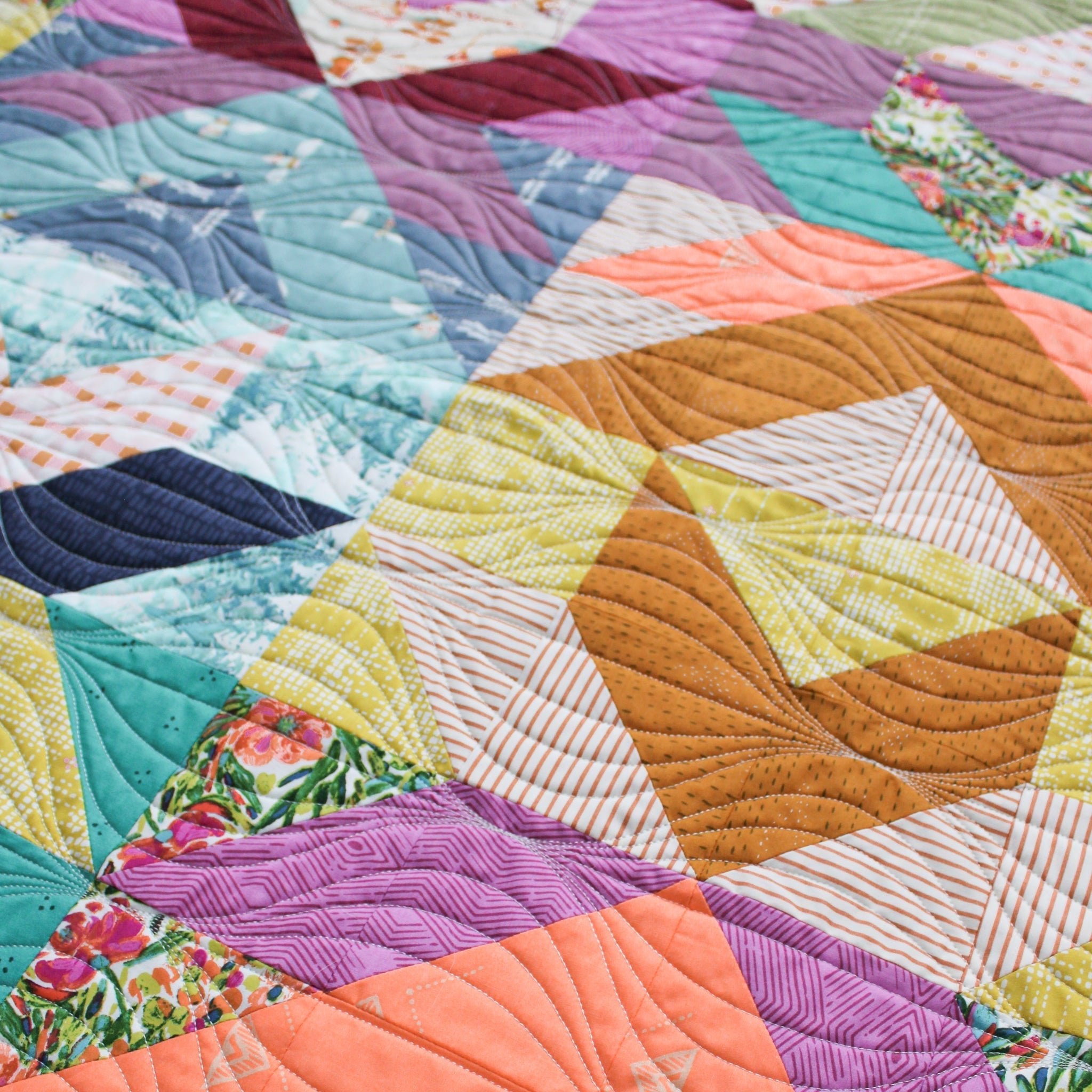
An overview for beginners – and everyone who wants to not only feel fabric but understand it.
You are facing your first (or fifth) quilt project and wonder:
"Which fabric should I use – and why are there so many different ones?"
Welcome to the fabric jungle! Don’t worry: I’ll show you which fabrics are really suitable for quilting – and why it’s worth taking a close look here.
✅ The 5 types of fabric you should know
1. Quilting Cotton – the classic
If quilts had a home, Quilting Cotton would be the living room.
- Stable, easy to work with, not too thin, not too thick.
- Large design selection – ideal for patchwork blocks, binding & backs.
- Still shape-retentive after many washes.
💡 My tip: If you are starting with patchwork, start here. You can't go wrong.
2. Batiste – soft, noble, and feather-light
A finely woven cotton fabric with a silky surface.
- Especially beautiful for wholecloth quilts or baby clothes
- Quilts well, but looks a bit more elegant than standard cotton
- Attention: Batiste can slip slightly the first time – secure well!
📌 Perfect for everyone who likes delicate, airy quilts with lots of softness.
3. Linen – the characterful one among fabrics
Natural, textured, a bit stubborn – but beautiful!
- Ideal for minimalist, Scandinavian quilt designs
- Becomes softer over time and has a great feel
- A bit trickier to sew – iron well and baste properly!
💡 Mix with cotton for structure AND sewing friendliness.
4. Muslin (Double Gauze) – the fluffy wonder
Soft, loose, lightly creped surface – feels like a cloud.
- Great for cozy baby quilts or blankets without binding
- Flexible when sewing and distorts quickly – patience required
- Less ideal for precise patchwork – more for simple shapes or wholecloth
🎯 If it needs to be quick and very soft: muslin!
5. Special fabrics: Liberty Tana Lawn, Chambray, Flannel
Depending on style & season, also worthwhile:
- Tana Lawn: fine, slightly shiny, ideal for luxurious blankets
- Chambray: modern look, slightly denim-like
- Flannel: warm and soft – for autumn & winter quilts
🪡 What else should you consider when choosing fabric?
-
Prewash yes or no?
→ For muslin and linen: yes, definitely
→ For patchwork fabrics: a matter of taste – I recommend it for dark colors or sensitive skin -
Same quality = better result
→ Only mix fabrics with similar weight & behavior. Otherwise, the blocks will warp. -
Not suitable for quilts:
→ Jersey, stretch, very thin viscose – unless you love sewing adventures 😉
✨ Conclusion: Your fabric, your style – but please with feeling
You see: There isn’t one perfect quilt fabric – but many really good options, depending on what you plan.
My advice: Start with high-quality quilting cotton or batiste if you’re unsure – and go from there.
📦 Fabrics & sets in my shop
Want to get started right away? In my shop you’ll find:
- Selected quilting cottons & batiste fabrics in a modern color palette
- Material kits for wholecloth quilts
- Fat Quarter Bundles, perfect for your next patchwork project
👉 Here’s where to find the fabrics → [Shop-Link einfügen]
💬 Any questions?
Just write to me – I'm happy to help you choose.
And if you're not sure whether linen or muslin fits better: I've sewn with both. And spoiler: I love them all.
Meta description (SEO, 159 characters):
Which fabrics are suitable for quilting? Beginner-friendly comparison of cotton, linen, batiste & more – including tips, FAQ & shop recommendations.